On a hot day at Kingston -Upon-Thames

Poem by: Giuma Bukleb

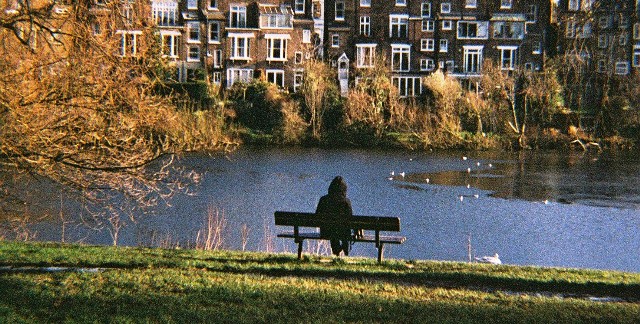
If that part of the river Thames, below “Kingston Bridge”, where the trees are willingly anchored, on both banks,

Had eyes

It might have glanced, on that hour of  the evening, the alertness of my anxiety,

It might have noticed, at the same moment, how the desire of the poem, setting its traps in my blood for the seagulls’ flutter,

And pigeons’ revelation!

If that part of the river Thames, where “Kingston Town” is floating like a paper boat, had eyes

It might have sighted, with astonishment, how my body beats with the fever of the rhythm,

And would have realised how my soul becomes soft and pure,

Like the coo of pigeons!

If that part of the river Thames, in those corners of my memory, where scattered thirsty villages, hang and swing, with insomnia, in the nights of Jabel Nafousa, where Misrata is bleeding from a distance of a breathe of a weddings’ ululations,

Had eyes

It might have hunted some of the brightness of my joy in a sky of fear and clouds!

If that part of the river of my youth, before the Bedouins arrived to the streets of Tripoli on the back of their luxury cars, and shoulder mounted rifles that are hungry for killing,

Had eyes

Walking slowly,

In the time of a bloody Arab spring,

In that spot of the day, in that space, far away from London’s bustle, which is called “Kingston Promenade”, on that very hot day, where trees are willingly anchored, on the Thames banks,

Anxious,

Tentative,

The boat of my life,

Sails

Sorrowfully

Into the bushes of the days..

27/06/2011

المستقبل بوضوح (د. محمد محمد المفتي)

د. محمد محمد المفتي

أعرب الصحفي في وكالة رويترزللأنباء”دانيال سيروير”عن ذهوله من عودة الأمان وعودة الحياة الطبيعية إلى ليبياعقب حرب التحرير لإنـهــاء أربعة عقود من الديكتاتورية. وقال دانيال إن”ليبيا شهدت أسرعتعاف ما بعد الحرب شاهدته في حياتي، انه أسرع من البوسنة وكوسوفو والعراق أوأفغانستان”. وتساءل ” لماذا هذا الانتعاش السريع ؟

سـماحـة الليــبـيين
وإذا كان مراسل رويترز أول من كتب، إلا أن هذا الانطباعوالدهشة كانت واضحة في أحاديث الصحفيين والدبلوماسيين الذين قدموا إلى بنغازي منذالأسابيع الأولى. في تلك الفترة روج النظام المدحور لفرضية القبيلة .. وهكذا أخذالعالم يتحدث عن القبائل الليبية المتمردة على القذافي. لكنهم فوجـئوا عندما وصلوابنغازي ووجدوا الترحاب والكرم .. وأن بإمكانهم التجول في المدينة إلى ما بعد منتصفالليل .. بل والذهاب إلى الجبهات والإقامة مع الثوار في حميمية لم يعهدوها.

سـرعة الانتعاش والعودة إلى الحياة الطبيعية عائد بالتأكيدإلى موارد ليبيا الحالية والمرتقبة، وما وصلنا من دعم خارجي عربي وعالمي. لكن ماتحقق، وما نشاهد من قـدر عال من  الأمنوالأمان راجـع في اعتقادي إلى طبيعـة شـعبنا السمحة المتسـامحة وروح التكافلالمتأصلة.

والـقـلـق أيـضــا
لكننا نعرف أيضا أن هذه الصورة شبه الطبيعية والمثيرة للإعـجـاب، تخفي وراءهاقدرا من القلق والتوتر، تبدو واضحة في لغة السياسيين المتلهفين وتراشـقهم، وماتنطوي عليه تصريحاتهم من تمجيد وتنـديد أوإدانات وتشكيك.  أما هموم الناس الآن فتتمحور حول الاستقرار وما قد يحملهالمستقبل من مفاجـآت.  الناس تريد أن تعيش،وتبني ويذهب أطفالهم إلى المدارس. وهناك نازحون ومهجرون يريدون العودة إلى بيوتهموقراهم.

ولهذا حيننتحدث عن نتائج ثورة فبراير المجيدة، علينا أن نميز بين ما تحقق وإيجابي ، وبين ماهـو سلبي نتيجة التقاعـس (عدم جمع القمامة) وسوء الآداء ( ارتباك رعاية الجرحي) ،وسوء اختيـار المسئولين واحتجاجات الموظفين ، والعمال المضربين.

الكل يشكو ..من رئيس المجلس الانتقالي إلى رجل الشارع .. لكن الشكوى نزوع طبيعي لدى الإنسان. إنها مؤشـر إلى الفارق بين ما هو مطلوبوبين ما يتحقق فعلا. بل إن غياب النظام اليومي (الروتين) المألوف وسرعة التغييروالتوترات المفاجئة والتوقـع ، كلها تسـبب الإنـهاك النفسي ونضوب الصبر.

والمفارقة أنهذا الاضطراب يبرز بوضوح في الصحافة وأجهزة الإعلام، التي تحظى بقدر هائل منالحرية غير مسبوق في تاريخنا. لكن المثـقـفين أصلا بحكم مشاغلهم وطريقة تفكيرهميرون أن التعقيد هو أصل الأشياء. بينما يستثمر قادة الأحزاب الوليدة كل خبر وكللحظة توقف. في جو الحرية يمسي الجدل والرغبة في الإدهـاش أحيانا هـدفا في حـدذاتـه.

ولنعترف، بلونهنئ أنفسنا، أن هناك الكثير الذي تحقق. لكن الناس وسرعان ما تنسى. ويكفيني مجرداختفاء القذافي وأولاده وجواسيسه ولجانه الثورية، واختفاء الرعب الذي زرعه في كلمكتب ومدرسة وشارع .. واختفاء لغة التمجيد والتملق، وغرائبيات عقل القذافي التيأرهقتنا لمجرد سماعها وقراءتها عدة مرات يوميا على لافتات الشوارع والأوراقالرسمية وإذاعاته .. فضلا عن  أسماء الشهوروالتقويم السنوي، وصفة ” الشـعبية ” التي أقحمت بكل فجاجة وتزوير.  ويفترض أن تختفي الآن ظـواهر الوساطةوالتجاوزات.

بــؤر مـعـتمـة
نعم، بدأتحياتـنا تـعـود إلى طبيـعـتـها .. لكن هناك استـثناءات .. هناك نقاط معتمة بحاجةإلى نقاش ومعالجة.

هناك مناطق بكاملها في الجنوب، في فـزان لم تصلها الثورةبعد، لم ” تتحرر” ، رحلت عنها دولة القذافي، لكن لا وجود لشرطة أو جيشأو أحيانا حتى علم الاسـتقلال، تحت سيطرة مجموعات مسلحة ترعب وتنهب، كما قال ليصديق قادم من هناك. الأمر خطر. كل ما هنالك أن فلول القذافي قد فقدت القدرة والهدفوخارت وتحللت أوصالها.

مقـتـضـــياتالإعـمـــار
 ثرنا من أجل الحرية والعدالة ودولة القانون.وحتى وإن اختلفنا في تفسير هذه المصطلحات، فإنـها تشترك في كونـها مطالب معنوية.وقد تحقق وسيتحقق قـدر كبير منها، لأنـها ضرورية أصلا لاسـتقرار المجتمع وازدهاره.

ونحن بحاجـة إلى إعادة إعـمار، وتنفيذ برنامج واسع للتنميةأولا لمواجـهـة البطالة العالية بين الشباب التي ورثناها عن جماهيرية معمر، وثانيالتعويض كثير من المدن والمناطق التي أهملها نظامـه الأرعن وعـقـوباته الجماعية.والاعـمار قادم بفضل الدخل النفطي، وحاجة العالم للاستثمار لدينا. ومن هنا الحاجـةإلى إعادة بناء إدارات الدولة لتكون في مستوى المهام القادمة، سـواء من باب حسنالآداء أو الشفافية وطمس الفسـاد.

نتــائج حـربالتحـرير
حرب التحرير بقدرما سطرت لليبيين أمجادا من البطولات والتضحيات، تركت وراءها عشرات الألاف من أسرالشهداء، والجرحى. وتركت التشكيلات المسلحة. وهذه كلها مشاكل حقيقية ومعـقـدة ، بلوبمثابة قنابل موقوتـه، قـد تفجر البنـاء السياسي مرة واحـدة وتـلقي بنا إلىهـاوية الفوضى والدمار. وللأسـف لم تظهر بـعـد أي معالجـة جــادة لها. مجرد وعـودوحلول مؤقتة وجزئية مبعثرة. فلا الأموال المطلوبة خصصت ولا إدارة مستقلة وموحـدةأنشئت.

بل إن موضوع الثوار وانتشار السلاح عولج حتى الآن بشئ منالفجـاجة، كقول مسئول مثلا أن على الثوار أن يغادروا طرابلس إلى مدنهم، كما لوكانوا مرتزقة، حاشى الله. ناهيك عن حملة التشويه المشبوهة التي لم يتصدى لتفنيدهاالإعلام ولا المسئولين. وقد طالبت مرارا في أكثر من مقال، بضرورة إشـراك الثـوارفي السلطة وتسليمهم حقائب وزارية الآن. وقـد سـبق أن قدمت للأسـتاذ مصطفى عبد الجليل رئيس المجلس الانتقاليبرنامجا متكاملا باسم ” مشروع الوفاء والعرفان” لإعـادة اسـتيعاب وتأهيلالثوار، بالمكافآت المالية والأوسـمة، والمرتبات والتدريب المهني أو العسكريوالبعثات الدراسية، ومنحهم قطع أراضي سكنية ومعها منح لبنائها، بل وامتيازاتمعنوية وصولا إلى تخصيص شباك في كل مصرف لخدمتهم.  
شـكل الدولـةالمطـلــوب
دولة القذافياتسمت بالفوضى لخلخلة المؤسـسـات وإشـاعة الفسـاد عن قصـد. بينما أقام الطاغيةدولتـه الموازية المعتمدة على أجهزة المخابرات واللجان الثورية. وكما يبدو لنااليوم، فإن الرجل الذي كان مسكونا بشتى المخاوف، كان همه تكديس السلاح في أرجاءالصحراء عسى أن يحميه ذات يوم. أما الدولة فابتكر لـها شتى الأشكال من مؤتمراتولجان وفعاليات وتصعيد، كلها من باب التمويه في ضوء ما تكشف اليوم. ومن باب إحكامالسيطرة تحولت الحكومة تدريجيا إلى سلطة مركزية يديرها أحد أزلامه، وحملت طرابلسوزر ما حدث.

إن بلادنا بحكمتكوينها الجغرافي الشاسع وبعد المسافات بين مدنها وقراها، لا تمكن إدارتـها إلابشكل من أشـكال اللامركزية .. وقد طالبت مرارا بإعادة إحياء نظام المحافظات الذيأنشئ عام 1963، بعد تعديله ليتواءم مع التكاثر السكاني خلال نصف القرن الماضي.ونظام المحافظات من شـأنه أن ييسر على المواطن، ويسـمح بتوزيع عادل لحق كل منطقةفي دخل النفط وبرامج التنمية.
وأخــيـــــــرًا
لقد كانتالحياة في ظل الطغيان مرعبة وبشـعة ومدمرة ومهينة. وكانت الإدارة فاســدة ومهلهلةومتدنية الكـفــاءة. ونحن اليوم في مواجـهة تحديات هائلة وخطرة. وعلينا أننعالجـها بحكمة ، وإلا سـندفع الثمن أضـعافا مضاعفة. والثورات، مثل الحـروب،تـقـود إلى نتائج تتجـاوز خيالات من حلموا بها أصـلا ودعـوا إليها. فلنحتفظبتوازنـنا، ونبقى بصرنا مركزا على المشاكل الحـقـيـقـية، بعيدا عن الصخب الإعلاميوتنافس النخب السابق لأوانـه. ذلك أن مهام هذه المرحلة الأسـاسية هي تحقيقالاســتـقـرار والمحافظـة على وحـدتنا الوطنية. وعسى أن يحمي الله ليبيا من شططبعض أبنائها.
بنغـازي 11 /11 / 2011

Erasing Gaddafi

If you walk inthe streets of the Libyan capital Tripoli these days, you will probably feelthat this city hasn’t been under the siege of a brutal dictator for nearly sixmonths of the Libyan revolution. The presence of Gaddafi is being erased notonly from the walls and billboards of the capital where they used to stand, butalso from the memory of many Libyans.

Living all yourlife under a cult dictatorship and then coming to the realisation that thetyrant isn’t sharing the air that you breath anymore, isn’t easy to reach. As aLibyan you were faced everyday with a reminder that Gaddafi isn’t just theleader of your nation, but also that his presence will haunt you as long as youadmit your identity as a Libyan.

In 1984 I wasliving with my family in London, when Gaddafi henchmen at the Libyan embassyopened fire on a group of Libyan protesting his rule outside the embassybuilding killing PC Yvonne Fletcher and injuring a number of protesters, I waseight years old, getting to realise at that age that the actions of one man candetermine the perception of yourself and a whole nation according to his madbehaviour.

Gaddafi’ssurvival over the years was based mainly on his success, if we can call thatway, to develop a sense of fear and invincibility in the hearts and minds ofLibyans, that it was the destiny and faith of Libyans to be ruled by him, andthat whatever they did to destroy him they will fail, and he will end upbrutally hanging his opponents in public squares, broadcasted on statetelevision to be seen by Libyan families sitting to eat their dinner.

Over the yearshe managed to embolden that sense of invincibility in the minds of Libyans, ashe survived the 1986 American bombardment, and the many attempts by oppositionfactions to assassinate him, and surviving the several years of internationalsanctions on his regime after being accused of killing 270 people on PanAmflight 103 over Lockerbie Scotland in 1988. Watching Gaddafi rubbing shoulderswith world leaders in European capitals, and watching him meeting the formerBritish Prime Minister Tony Blair at his tent in 2004, and then becoming an allyto America’s international war on terror, all emboldened the image of hisinvincibility, and mythical indestructibility.

Hisinvincibility became part of the Libyan mind through fear, that failure tooverthrow him leads to grave consequences. You can observe that kind of fear inLibyan popular culture, in political satire and jokes. One of those jokes goeslike this ‘While visiting a newly developed tall building in Tripoli, Gaddafiand two of his associates decided to stand on top of the building to view thewhole city beneath them. While Gaddafi was standing on the edge of the rooftop,one of the associates seeing an opportunity to kill Gaddafi by pushing him offthe building whispers to his colleague telling him to push Gaddafi to his deathand get rid of the tyrant, the other associate replied in horror “And whyshould I do that, he might have the ability to fly”

Seeing theimages of bloodied dead Gaddafi, shattered that delusion of invincibility andmythical ability for him to survive against all odds inside two generations ofLibyans, those who were indoctrinated in his personality cult, and began tobelieve out of helplessness and desperation, that he is here to stay, andwithout him life will be a strange and surreal reality.

Gaddafi wasobsessed about his legacy that he will leave behind when he dies from old age,as he wished it to be, his arrogance and delusional defiance against worldpowers that tried many times to isolate or kill him, convinced him that hesecured his place in Libya’s history as the “father of the nation” as he used topreach, and a romantic revolutionary challenging imperialist colonialist superpowers,all this ended when young Libyans went on the streets burning and trampling onhis pictures, mocking his frizzy hair and calling him “Bushafshufa”, erasinghis legacy from their memories, before washing his presence from the streetsand cities of the Libya.

Libyans beganthe process of erasing Gaddafi since the first day of the uprising back inFebruary; the memory of his existence became distant and fade away during thelast several months, reaching the climax by his physical death yesterday, leavinga legacy full of tears, pain and death, which was apparent on his face in thelast moments of his life. The long process to heal from this dark period of ourlives as Libyans has begun, while the fearful child inside me refuses to acceptthe reality of his death, anticipating that he will find a way to come backfrom the dead, for most Libyans that suffered under his regime, his deathbrings a sense of resolve and closure to their suffering, and puts Libya ontrack towards achieving the hard task of healing, rebuilding and a betterfuture for all Libyans.

Libyan Chronicles (5)

“I’ve never witnessedsuch rain in all my life!” that’s what most Libyans will tell you when talkingabout the amount of rain the country has seen in the last few weeks sinceGaddafi was toppled. Libyans consider rain a good omen, in a country where 90%of its land is a dry desert; it’s not surprising that any drop of rain will be cherishedand interpreted as a blessing from heavens, especially when many will admit thatthe evilness of Gaddafi kept rain away from falling on the country. And I mustadmit that I myself have never witnessed such rain in my life!

During the months ofthe Libyan revolution many activists inside and outside Libya relied on socialmedia to either organise themselves, exchange information, campaign for causes,or relay news reports on the situation inside the country. Twitter was used bymany activists outside Libya, and to a lesser extent inside Libya. I had theopportunity to meet a group of Libyan tweeps that were involved in activitieson the ground during the early days of the revolution before the internet wascut by the regime, and during the weeks and months afterwards. Ali, Akram andSaeed, are part of a group of highly skilled internet activists that I knewthrough the internet, and met physically, some for the first time, at CasaCaffe in Tripoli’s old town.

All three of them wereactive on Twitter in the early days of the revolution, and continued to work duringthe hard months in Tripoli. We all agreed that despite the low percentage ofinternet users in Libya (5.5%), when compared with its neighbours in Tunisiaand Egypt (more than 10%) of the population in both, but the type of internetusers in Libya, their IT abilities and online skills, made it possible for manyusers to continue to work and provide crucial information and coordination evenwhen the service was cut by the regime, the quality of internet users in Libyawas valuable in the electronic war against a regime that established a smallbrigade of internet hackers known as ‘The Green Electronic Army” to spreadmisinformation and trace activists.

The next day I accompaniedmy mother a community events in our neighbourhood, which was held in my oldprimary school. I found it amusing to go and visit the place after nearlytwenty years, which seemed to me much smaller than I remembered. Social and communityevents, also known as Bazaars, became a regular feature in Tripoli and many otherLibyan towns and cities. These events usually focus on women, children andfamilies of neighbourhoods and communities in the city, where members of the communitymeet and participate in simple activities like singing, selling homemadecrafts, and foods, and traditional costume show for little girls, and aims tocollect donations for community charity projects, and promote social cohesion.Since Tripoli’s liberation, dozens of these events have been held either onlocal level or for the whole city. Some people criticized such events on theground that they have a sense of celebration and festivity, which they argue isinsensitive, while other parts of the country is still in war and many are beingkilled and injured every day.

Later in the day newsreports came in that fighting erupted in the southern neighbourhood of AbuSalim, also known for the notorious Abu Salim prison. While many local observersdownplayed the incident, media outlets failed to present an accurate picture ofwhat really happened, combined with an exaggerated reaction by the different militarygroups dealing the capital’s security, showing their strong presence in everymain road to indicate their readiness to prevent any signs of lawlessness orsupport for Gaddafi and his regime in the city.

Presenting the reality on the ground in Libyawasn’t and still isn’t an easy task, many media outlets still follow exaggeratedreports and rumours, the daily consumption of a small community that developeda distrust to local news outlets. While social media, especially Facebook andTwitter, helped in many ways relay news and information from Libya, I stillthink that we are not seeing the real picture, and I find myself cautious whenit comes to using social media as a news source, in the absence of professionalmedia workers on the ground. As long as the internet usage is limited to a smallpercentage of the population, not all will be presented with their opinions andviews on social media tools like Twitter, we are bound to get a distorted pictureof reality and in some cases a false one.

I spent my last eveningin Tripoli with friends and colleagues at the Press building, meetingenthusiastic journalists who are working on producing new publications, amongthem re-launching the prominent Libyan children’s magazine (al-Amal) which wasfirst published in 1964 by social and women activist the late Khadija Jahami,there are also plans to produce a magazine for teenagers, and another forwomen. Idris Mesmari, the head of the Press Authority stressed on the independenceof all publications which are funded by the organisation, saying his role isonly administrative and that the authority doesn’t interfere in the editorial policyof any publication and journalists have the freedom to discuss any matter,without getting any permission or being censored.

Not far from the Pressbuilding large machinery and bulldozers was busy tearing down the high walls ofthe infamous Bab al-Aziziya compound, while a large JCB was tearing downGaddafi’s symbolic home inside the compound. Libyans are being liberated oncemore from a symbol of fear and tyranny, erasing another shred of memory thatreminds them of this regime, promising never to go back, hoping that the victimwon’t turn into the victimiser.

Libyan Chronicles (4)

If you walk along thenorthern edge of Tripoli old town, close to the ancient roman Marcus Aurelius arch,you are most likely going to meet many of the Libyan artists that have beenoccupying small studios in the old European consulates that used to be based inthis area of town. Radwan Abushwisha was walking under the afternoon sun withhis shoulder bag, a bearded middle aged man, with lines of a hard life carvedon his face. Radwan is a poet, writer and painter, who lived for many years inIreland in the 1970’s and 1980’s, is a unique example of the Libyanintelligentsia, that suffered persecution and marginalisation by Gaddafi regimefor their stand against tyranny and social conformity, but continued to beadmired and respected by most new and old generations of Libyan writers andartists.

Earlier in the day Ipassed by one of Tripoli’s main cemeteries, Sidi Hamed, in the Gergarish area,near the beach, after reading reports that the main Sufi shrine inside the cemeteryhas been vandalised and demolished by a group of Salafi extremists, who believethat all Sufi shrines and tombs of Sufi figures to be demolished, claiming thatthey are against the teachings of Islam and is considered idolatry. It has beenreported that factions of the same group managed to vandalise a dozen gravesand shrines in east Libya, and Misrata before they were stopped, and now itseems that they are exploiting the lack of strong authority and centralsecurity apparatus in the capital to push their fanatic agenda. The buildingwas in ruins, and there were marks on the shrine’s dome suggesting the use offire arms. Libyan officials and religious leaders condemned such acts.

Later I made a met poetand activist Ramez Enweseri, who told me how he spent the early days of therevolution in Brega, where he worked as an aviation engineer at Brega oilairport. Ramez spoke about the lack of information in the first days, and how hemade the decision with his colleagues to embark on a dangerous journey back toTripoli along the coastal road, where they were always stopped at checkpointguarded by Gaddafi forces, which were suspicious of any individuals coming backfrom the east. He recalled how in few times they thought that they going todie, managing eventually to reach Tripoli safely after three days on the road.

Not far from al-GhazallaSquare, off al-Baladiya Street, you will find a traditional Libyan cafe thatoccupies a piece of land where the pre-Gaddafi Libyan parliament used to stand,which was demolished by the regime in 1990’s to erase all traces of this historicallandmark of Libyan independence era. I met poet and journalist Khaled Darwishat the cafe known now as (The Parliament Cafe), he told me about how he spentthe days of Tripoli’s liberation in the Fashlum district last August on top ofa building monitoring the movement of remnants of Gaddafi forces. Khaled isplanning to publish a book of memoirs he wrote during the weeks and months hespent in Fashlum and Tripoli, which he hopes will help in preserving part ofthe narrative of the Libyan revolution.

Despite all the ongoingpolitical debate in Libya these days, especially between ‘Islamists’ and ‘SecularLiberals’ which sometimes can reach to absurd levels, I found that many young Libyanactivists were not enthusiastic about joining any of newly establishedpolitical parties and groups, and most are focusing their efforts on either mediaor civil societies. I attended the inception meeting of a newly established civilsociety that will focus its work on promoting and supporting democracy and monitoringhuman rights and the political and election process in Libya in the future. Thesociety which is named (Libyan Observatory to Support Democracy) or (Ain) includesintellectuals, lawyers, doctors, journalists, and academics, many of whom werehuman right activists during Gaddafi era who were persecuted and imprisoned manytimes for their activities.

During this meeting Ihad the chance to meet Ahmed, a freedom fighter, that took part in the firstpeaceful protests against Gaddafi in Gurgi area of Tripoli, where he was shotin the leg, and had to hide for many weeks before joining freedom fighters inNafusa mountains, where he took part in the liberation of Yefren, and thenjoined revolutionary forces on their last push to liberate Zawiya and Tripoli.Ahmed decided after Tripoli’s liberation to focus on working with human rightscivil societies, especially investigating the circumstances of the 1996 AbuSalim prison massacre, which his father was one of the victims of this heinous crime.

While driving back home,it was reported that Mutasim Gaddafi was captured by government forces inSirte, and although the news wasn’t verified, celebratory gunfire was echoingin every direction of Tripoli, many cars were flashing their warning lights,and honking their horns. Many Libyans after long weeks of desperation anddealing with tragic news, became obsessed with hearing ‘good’ news andexpressing their delight with firearms and shooting guns in the air, causinglots of damage in property, and injuring people randomly, although manycampaigns has been launched to discourage people from using firearms in thecity, some incidents of celebratory fire injuries are still being reportedacross the capital. We still have a long way to go… but we are hopeful.

To be continued…

Libyan Chronicles (3)


Just across the streetfrom the United Nations mission headquarters in Tripoli’s Baladiya Street, stands al-Safwa hotel.A decade ago, young and upcoming Libyan writers and intellectuals used to meetup at its small cafe, where it became during the years a centre for Libyanintelligentsia in Tripoli to meet, and discuss and read their latest literaryworks. I used to visit the place every time I visited Libya, but during theyears this group that often visited the cafe stopped coming back, some weresucked into the pressure of the daily hardships of life, others found newplaces, as public places in the city grew in number, while others, like me,left the country, or left this life altogether.

Parking my car at thesame parking lot, on a quiet warm Libyan afternoon, and passing by the emptychairs of al-Safwa hotel cafe, observing the details of the streets of downtownTripoli, the same smells of dust and car smock, and overflowing sewers, youngmen standing outside the shops of Magrief street with cups of coffee in onehand and a cigarette between their fingers, the details of the place gave methe delusion of normality, that nothing has changed, as if the place, thebuildings, the walls, the streets, weren’t aware of the changes occurringaround us.

Tripoli is going backto its normal habits, the graffiti on the walls and the tri-colours of theindependence flag, a fresh sea breeze free from the fearsome images of Gaddafior “Shafshoufa” as he is mockingly known now, are reminders that somethingdramatic occurred here, but Tripoli seems keen, and impatient, to return backto a normality, as it did before many times for hundreds of years, or as afriend puts it, rather cynically, that the revolution is finished and now weare entering a phase of politics, that many Libyans won’t be interested intaking part in.

Not far away fromMartyrs Square, sellers erected market stalls to sell “revolutionary” merchandise,independence flags in different sizes and forms, Tri-colour scarves, hats,bracelets, necklaces, rings, key holders, and many other products, some showedthe Amazighi symbols and flag, while other stalls sold cassettes and CDs with revolutionarysongs, but the most funny one was selling posters and photoshoped pictures ofGaddafi and his cronies in comical scenes, mocking the man that used to callhimself the “the king of kings”.

Walking in the narrow alleywaysof the old town, a sense of normality is trying to return to the streets, thefamous gold and silver merchants, the traditional economic powerhouse ofTripoli, were all open dealing with gold and exchanging currencies, a stone’s throwfrom the Libyan Central Bank. The copper engravers and craftsmen were busy carvingnew revolutionary images in their old dark shops.

Close to (The ClockTower), a famous landmark in Tripoli, there used to be a traditional Libyancafe, which was renovated into a more modern touristic coffee and sandwich shop,named (Caffe Casa) where many international journalists and mediacorrespondents sit and enjoy the sun and sea breeze in a city that held themfor many weeks hostages at a gilded cage called the Rixos Hotel.

In the evening Ivisited the headquarters of newly established ‘Authority’ overseeing andsupporting newspapers and journalism, after passing by the ruined and charredpress building in Jumhouriya Street that was targeted with mortar shells byGaddafi forces during the battle to liberate Tripoli last August. The newbuilding was also scarred with bullet holes on its facade as it was targeted byfleeing Gaddafi troops during the same battle. I met Idris Mesmari the head ofthe (Press Authority), a writer and activist that was detained for a decade byGaddafi regime during the 1980’s, and was the voice of revolt in Benghazi inthe first night of the Libyan uprising in February, where he was detained formonths in Tripoli before managing to escape.

The Press buildinghouses the new official newspaper Febraiyer (February) a sixteen pages daily tabloidsize newspaper, that is funded by the press authority, and run by youngenthusiastic Libyan journalists, some used to work under extremely difficultconditions in Gaddafi regime newspapers, and now are enjoying the atmosphere offreedom that has been gained in Libya.

The Press Authority issaid to help and support new publication by only granting them a permission tobe exempted from paying any printing costs for at least the first three issues,then any new publication must pay printing costs for the next issues if it was lookingto stay in circulation. Nader, a journalist working with (Febraiyer), and usedto work with many pre-revolution publications, spoke about how Gaddafi secretpolice wrote damning reports about many journalists, including himself, whenthey didn’t show loyalty to the regime during the last several months, and somewere even arrested and tortured, and now he is glad that a new Libyan press isemerging after decades of censorship and persecution. The task isn’t easy, hetold me, the newspaper is facing technical difficulties, lack of printingpaper, and old unmaintained offset printers, but all the journalists are fullof hope that they will overcome these difficulties.

Driving back home atdusk, I passed by the ruins of Bab al-Aziziya, Gaddafi infamous compound, manycars were leaving the compound that has been turned into a public place forfamilies and ordinary people to visit, market stalls of sellers occupied partsof the place to sell their revolutionary merchandise and some people spoke of thesheep market will be placed inside, prior to Eid al-Ad’ha next month.

From the east abrighter moon was rising in another night in Tripoli without fear.

To be continued…

Libyan Chronicles (2)


Waking up in the old room,adjusting to the new reality of the place, recalling the details of the housethat used to be and still is home, after long and eventful weeks and months, Irealised that I am back in Libya.

I didn’t have a plan for thisvisit, besides spending good time with the family and listening to themnarrating their account of the past months, their hopes and fears, I decided tolet my plans loose, and to reflect on the dramatic change the country is goingthrough.

I found a stack of new Libyannewspapers; my brother got me before I arrived, so I sat down and browsed themall. There were 18 newspapers, a small portion of over a hundred publicationsthat are circulating in free Libya since the revolution in February. In generalthey all seemed to focus on revolutionary propaganda, and raising awareness onissues like security and protecting public services and encouraging the commongood. Some of the newspapers are published by The (Authority of SupportingPress), which replaced the state run (General Press Corporation), which used toown and run all Gaddafi regime newspapers. The new authority will offer fundingand logistical support for some newspapers but claims it won’t interfere in theway these newspapers are run, so far it’s too early to evaluate most newspapers,and I can assume that most of them will dissolve due to lack of resources andonly a dozen or more will manage to survive and progress.

In the evening I was invitedto attend a political party – under establishment – meeting, this was anopportunity to experience part of the political debate that is forming andbrewing in Libya. Many Libyan political and intellectual figures are preparingthemselves to take part in the new political process in Libya through formingpolitical parties that are all under establishment until a new party and electionbill is approved, which is expected in the next several months.

I listened to middle aged menand some young activists debating details of the party’s constitution andmanifesto, and the upcoming press conference they plan to have in few days todeclare the establishment of their political party and invite people to becomemembers. It was weird and surreal to listen to Libyans talking and debatingparty politics after decades of incrimination of any party activities in Libya,when the word ‘Party’ became synonymous to treason and persecution.

Driving around Tripoli isn’tan easy task, the infrastructure; roads, traffic signs and lights are in a verypoor condition, combined with a significant amount of rainfall during the previousdays made driving hazardous, but after a few hours you regain an ‘innate’Libyan sense of driving in the city.

I went to visit myGrandmother, an 80 years old lady that lived most of her life in her house inAzzawiya Street, near the main Tripoli Central Hospital that I used to work foras a junior surgeon. I always enjoy chatting with Grandmother, as she remindsme of the days we spent as kids at her house, when the family was small andintimate. She told me about the hard days during the early days of therevolution and her fears when NATO planes began bombing Gaddafi intelligenceheadquarters not far away from her house. She kept saying that all this bombingreminded her of her impoverished childhood and how she witnessed the bombingcampaign of the allies on Tripoli during WWII against Fascist Italy and NaziGermany that occupied the city.

After leaving Grandma’shouse, I decided to head to Martyrs Square and experience some of the joy andjubilation we saw on Television. The square was almost deserted, few cars wereparked in the middle, while wind blew posters and banners of martyrs hanging onthe Red Castle, few cars passed by raising the independence flag, and someyoung men with military fatigues fired unenthusiastically few shots in the air,as a celebration for the Libyan national football team reaching the finals ofthe African Cup of Nations. I didn’t stay long, and decided to return duringthe day to take some shots with my camera when some real celebration isplanned, although it seems that people passed the point of celebration and arenow sinking into the reality of daily life.

Driving back home through Hayal-Andalous and Gergarish, stopping at two or three checkpoint on the way,observing many cars brandishing stickers and banners of Libyan revolutionary symbols,and witnessing the usual daily fights of young men, I contemplated how muchchange did we achieve during this revolution?

It is obvious that we gonethrough a dramatic event, and in some cases a traumatic one, but it’s still yetto be seen how this event will affect the behaviour and mentality of Libyans,and whether we will get over revolutionary rhetoric and symbols of patriotismtowards a sober rational reflection on this dramatic change we went through,but for the time being it was liberating to drive around Tripoli without theimage of big brother dominating the streets and minds of Libyans.

To be continued…

Libyan Chronicles (1)


Theway to Libya started in Tunisia, as it all began during this year ofrevolutions. I took the plane from Tunis to Djerba around six o’clock in theevening. The Tunisair express plane was full of Libyan families, with childrenmostly wearing t-shirts brandishing the images and symbols of the Libyanrevolution. A lone young man with crutches hopping on the plane stairs, hisleft arm bandaged, which I assumed was one of the injured and wounded youngLibyans crushed in this bloody war for liberation.

Arrivingat Djerba in the after seven in the evening, I took a car to the TunisianLibyan border. Ali the driver is a Tunisian who hires his car for Libyanstaking this journey. We passed empty streets and sleeping town and villagesthat still reflect the rural life of Tunisia outside the hustle and bustle ofthe capital Tunis. We stopped at nearly four check points by Tunisian policeand Army before we reached the border town of Ben Gardan, which is only 30kmfrom the border crossing into Libya.

Manyused this road for different reasons in the last several months, and recentlythe Tunisian government became on high alert as many Libyan and Africanrefugees poured into their country, and smugglers used the area to achieve a quickscore, dealing with basic goods, gasoline, currency and recently humans andarms, which kept the Tunisian military on alert in this remote area of thecountry.

Afterless than two hours Ali the driver dropped me near the Tunisian side of theborder crossing. Carrying my bags and crossing the border at night I was an oddpresence between the lines of cars and trucks crowding the narrow lanes leadinginto Libya. I walked the 800 meters of no man’s land to the Libyan check pointwhere I saw the free Libyan flag and the Amazighi flag with its distinctive Zay(free man) symbol, a declaration that the Amazigh people from Nafusa Mountainand the coastal town of Zawara are controlling the area. Graffiti slogans werecovering walls of buildings, cursing Gaddafi and affirming the rights ofLibyans to freedom and democracy, and calls for Amazighi language to bedeclared an official language.

Aftergetting my entry stamp from the Libyan officer who was stamping all passportsautomatically on any page without checking the identity of the passport holder,I continued to walk until reaching the last checkpoint. Many Libyans in theircars offered to give me a ride, and another guy driving a battered pickup truckwith the word ‘Zintan’ spray painted on the side of the car offered to help mein broken English confused me with a foreigner, before he realised I’m Libyanwhen I thanked him for offering to help.

Mybrother and a cousin were waiting for me near the last check point, I wasthankful that he made the difficult journey to the border at night. The road waslined with Libyan car full of families returning from months of war.

Theway to Zawara through the towns of Zultin, Regdalain and Ijmail was closed asreports of sporadic skirmishes and clashes at that area erupted on Tuesday night;the traffic was diverted by the revolutionaries towards the Abu Kammash road closerto the sea.

Allthe way until passing the city of Zawiya, we were stopped at more than a dozencheckpoints by revolutionaries either from towns we passed or other revolutionarybrigades. Most of them asked the same questions, “where are you from (meanswhich city in Libya)? where are you coming from? And is the car owned by thedriver?” and once we were asked about our surname, I wondered then whatwill happen if my family name was “Gaddafi”.

Theroad to the family home on the west outskirts of Tripoli, took us nearly threehours, but I wasn’t bothered, I was observing attentively the new signs of therebirth of a new Libya that is still confused and chaotic, but hopeful andoptimistic about its future.

To be continued…

Prison Tales (By: Omar Abulqasem al-Kikli)


By:Omar Abulqasem al-Kikli
Omar al-Kikli is aprominent Libyan short story writer, from a generation of Libyan writer thatsuffered greatly under Gaddafi regime. He was one of a new generation of Libyanwriters in the early in 1970’s that came onto the literary scene full of hopeand new styles and ideas, only to be imprisoned for a decade, accused ofplotting to topple the Gaddafi regime.

These are a sample of acollection of short stories named (Sejneyat), written to commemorate twodecades of his release from prison in 1988; they are a testament of the yearshe spent with fellow Libyan writers and intellectuals in different Gaddafiprisons.

The stories follow thejourney of a political prisoner from the first day of his imprisonment, duringwhich he is adapting to this new reality, learning to survive in a place thatis intended to crush you physically and mentally. Al-Kikli satirises the ordealof imprisonment in simple direct style that doesn’t shy from presenting theharsh realities of the prison, but never fails to leave a trace of a smile,alas painful one, whenever reading these tales.
Strip Off

After I was pushed intothe cell, the iron door slammed on my face and I felt as if its heavy echoingmovement has crushed part of my soul. I tried to overcome my bewilderment and adaptmyself to my new status and place.

I examined the darkdepressing walls that were squeezing the tight space, trying to find traces ofthose who occupied this place before me.

There were some tracesand writings carved or written with different ways and materials on the walls.
A name and a date, was usually, written at theend of the carvings.

A prisoner has writtenat the end of one of these carvings, that he wrote this after fourteen days haspassed since he first arrived to this cell

I felt an enormousdread.

And said to myself, canthat be possible?! Is it possible for a human being to live in this place allthis period! Impossible! I can’t do this; if I don’t die I will kill myself.

I stripped off two completeyears in that cell.


The Technocrat

There was a prisonguard who used to give food to us and take the sick prisoner to the jail doctorwhenever he is not busy with his torturing duties.

It was astonishing howsome of his victims remembered him with gratitude and reverence!

The reason for thatthey said, was because he used to perform the torture with a technocratic conscience!As he performed his job without inflicting any kind of sentimental harm to thevictim (the raw material of his job, from his point of view), howeverperforming his job, with sincerity and dedication and in silence, until the materialis pliable and ripe, and is ready to be handed over to another authority toenter the next stage of the process.